How to measure for plantation shutters
Shutters are made to the millimetre for one specific opening, so a measuring error is not adjustable later - it is a remade panel. This is the method a professional uses, both so you can get a ballpark figure yourself and so you know what a proper measure looks like when someone does it for you.
- The six-point method
- Checking for square
- The mistakes that cost a panel
Before you start
Six
Six measurements per window, not two. Three widths, three heights, and you use the smallest of each. Windows are almost never perfectly square, and a shutter built to a single measurement will bind on the tight corner.
What to measureHow many
WidthTop, middle, bottom3
HeightLeft, centre, right3
Reveal depthAll four corners4
ObstructionsWinders, handles, locksAll
A steel tape, not a fabric one. Fabric tapes stretch.
Our measure is free, takes about half an hour and we carry the risk on it - if a panel comes back wrong because of our measurement, we remake it. This guide exists so you can price a job before you book, and so you can tell a thorough measure from a quick one.
Every manufacturer treats a customer-supplied measurement as customer risk, and a made-to-measure panel that does not fit is not returnable. Use your numbers for an estimate; let whoever builds them take the measurement they are accountable for.
Before you start
What you need
A steel tape measure. Fabric tapes stretch and are useless at this tolerance.
A pencil and paper, or a photo of each window with the numbers written on it.
A step ladder for anything above head height - measuring on tiptoe is how errors happen.
A spirit level or a phone level app, for checking whether the sill is true.
Ten minutes per window if you are being careful. It is not a long job.
Work in millimetres, always. Every shutter manufacturer in Australia works in millimetres and converting from centimetres is where a decimal point goes missing and a panel comes back 100mm short.
Step one
Start with the depth, not the width
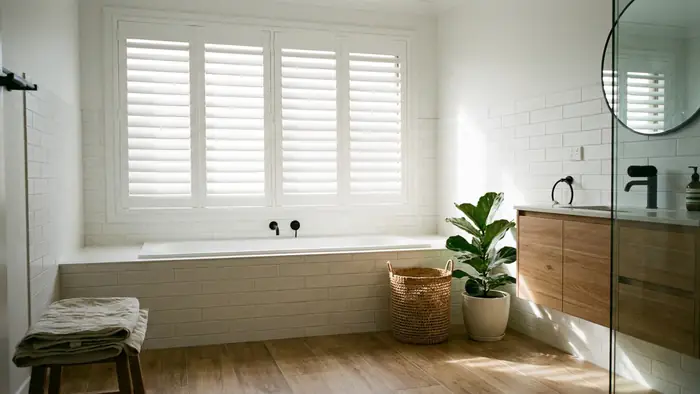
The first measurement is the one people skip. Measure how deep the window recess is - from the face of the wall back to the window frame - at all four corners. That number decides whether the shutter fits inside the opening or has to mount on the wall around it, and everything after it depends on the answer.
As a rule of thumb, around 60mm or more allows a reveal fit, where the shutter sits inside the recess and finishes flush with the wall. Less than that and it face fits on the wall surface. The exact figure depends on the louvre size and the frame profile, which is one of several reasons this is confirmed on site rather than settled from a photograph.
Measure all four corners rather than one. A reveal that is 70mm at the top and 55mm at the bottom is common in an older home, and the shallowest corner is the one that governs.
Step two
The six-point method
- 1
Width at the top
Measure across the opening as close to the head as the tape will sit. Record it in millimetres.
- 2
Width at the middle
Halfway up the opening, edge to edge. Do not assume it matches the top - in a settled house it often will not.
- 3
Width at the bottom
Across the sill line. This is frequently the odd one out, particularly where a sill has been replaced or repainted heavily.
- 4
Height on the left
From the head of the opening down to the sill, hard against the left edge.
- 5
Height at the centre
Same again down the middle. On a wide window the head can sag by several millimetres.
- 6
Height on the right
And the right edge. Now you have six numbers rather than two.
For a reveal fit, the smallest width and the smallest height are the working dimensions - the shutter has to pass the tightest point of the opening. For a face fit, you are measuring the area you want covered instead, which is a different and more forgiving calculation.
Step three
Check the opening for square
Measure both diagonals, corner to corner. If they come out within a few millimetres of each other the opening is square and any frame will sit cleanly. If they differ by more than that, the opening is racked and the frame choice has to account for it.
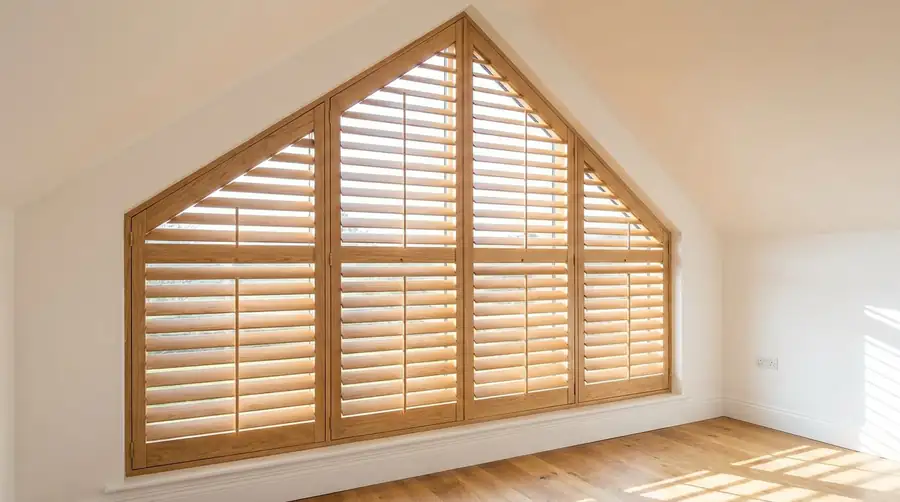
This matters more here than in a lot of the country. Older Queenslanders are timber-framed on stumps and they move, and even newer slab-on-ground homes on reactive Sunshine Coast soils settle enough to throw an opening out over twenty years. A Z frame laps over the wall face and hides several millimetres of discrepancy that an L frame would leave as a visible taper down one side.
It is also the reason a shutter measured accurately can still look wrong. The panel is square, the opening is not, and the gap is a wedge rather than a line. Nothing about that is fixable after manufacture, which is why it is checked before.
Step four
The obstruction check
This is the step that separates a proper measure from a quick one, and where most install-day problems originate.
| What to look for | Why it matters |
|---|---|
| Window winders | Awning and casement winders project into the reveal and a recessed panel will hit them. Either the frame packs out or the shutter face fits. |
| Handles and latches | Sliding and sash window hardware sits proud. Same problem, same two solutions. |
| Security screens | Fitted inside the reveal, these eat the depth a shutter needs. Measure to the screen, not the glass. |
| Architraves | A face-fit frame has to land on wall, not on the edge of a moulding. Measure the flat available. |
| Sills | A projecting sill decides between a three-sided and a four-sided frame. |
| Power points and switches | A face-fit frame beside a switch plate is a real and surprisingly common clash. |
| Air conditioner units | Wall units above or beside a window change the panel configuration entirely. |
| Pelmets and existing tracks | Note whether they stay or go, and who removes them. |
What goes wrong
The six mistakes that cost a panel
- 1
Measuring the glass instead of the opening
The shutter covers the opening. Measuring the visible glass gives a panel that is too small by the width of the window frame on every side.
- 2
Using the largest measurement
For a reveal fit it is the smallest of the three. Using the largest gives a panel that will not go in.
- 3
Working in centimetres
Everything is manufactured in millimetres. Converting is where a decimal slips and a panel comes back a tenth of its intended size.
- 4
Measuring one window and assuming the rest match
Two windows built to the same plan in the same wall are routinely several millimetres apart. Measure every one.
- 5
Forgetting the winder
The single most common install-day surprise, and entirely avoidable in the thirty seconds it takes to look.
- 6
Not photographing the window
A photo catches the thing the measurement sheet has no column for. Take one of every window.
The free measure
What happens when we measure
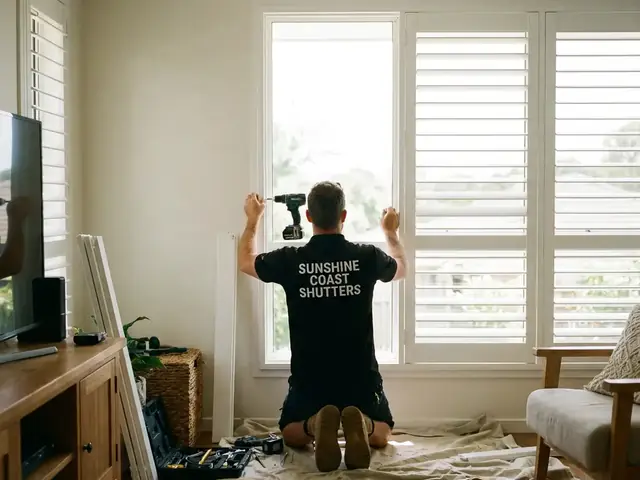
We take the six points, the diagonals and the depth at all four corners on every window, then we photograph each one. That part is mechanical and it takes about ten minutes for an average house.
The rest of the half hour is the conversation that actually determines the outcome - which room gets which material, which windows need a split tilt for privacy, whether the western living room wants outdoor aluminium instead of an internal panel, what happens to your existing sills, and where a hinged panel would foul furniture that is already in the room.
You get a written quote against those measurements, and if a panel comes back wrong because of a measurement we took, we remake it. That is the whole reason a professional measure exists - not because measuring is difficult, but because someone has to carry the risk, and a made-to-measure panel that does not fit is not returnable to anyone.
FAQ
Measuring questions
How do you measure a window for plantation shutters?
Measure the width in three places - top, middle and bottom - and the height in three places - left, centre and right - then use the smallest of each for a reveal fit. Also measure the reveal depth at all four corners, check both diagonals for square, and note every winder, handle and obstruction. Work in millimetres throughout.
Why do you measure a window three times across?
Because windows are almost never perfectly square, particularly in older Queensland homes on stumps and in slab homes that have settled. A panel built to a single measurement will bind on the tightest corner. Taking three widths and three heights and using the smallest of each guarantees the panel passes the narrowest point of the opening.
Do I measure the glass or the window opening?
The opening, always. A shutter covers the whole window opening, not just the visible glass. Measuring the glass gives you a panel that is short by the width of the window frame on every side, and it is one of the most common and most expensive measuring mistakes.
How deep does a window reveal need to be for shutters?
Roughly 60mm as a rule of thumb, though the exact figure depends on the louvre size and frame profile. That much depth allows a reveal fit, where the shutter sits inside the recess and finishes flush with the wall. Less than that and it face fits on the wall around the opening, which is a correct answer rather than a compromise.
Can I measure for shutters myself?
You can measure to get an estimate, and this guide is the method. What you should not do is order from your own measurements - every manufacturer treats a customer-supplied measurement as customer risk, and a made-to-measure panel that does not fit is not returnable. Let whoever builds them take the measurement they are accountable for.
How do I check if my window is square?
Measure both diagonals, corner to corner. Within a few millimetres of each other and the opening is square. Further apart and it is racked, which changes the frame choice - a Z frame laps over the wall face and hides the discrepancy where an L frame would leave a visible taper down one side.
What if my window has a winder or handle?
It has to be allowed for at the measure, and it is the most common install-day surprise when it is not. Awning and casement winders project into the reveal, so either the frame packs out to clear them or the shutter face fits on the wall instead. Photograph the handle when you measure - it takes thirty seconds and catches the problem.
Should I measure in millimetres or centimetres?
Millimetres, without exception. Every shutter manufacturer in Australia works in millimetres, and converting from centimetres is exactly where a decimal point goes missing and a panel comes back a tenth of its intended size. Write mm on the sheet so nobody has to guess later.
How long does a professional measure take?
About half an hour for an average house. Roughly ten minutes of that is the actual measuring; the rest is working out which material suits which room, which windows need a split tilt for privacy, and where a hinged panel would foul existing furniture. The conversation is what determines whether the result is right, not the tape.
Ready to shutter your place?
Tell us about your windows and we'll book a free in-home measure and a fixed quote.
Get my free quote