Get A Quote

Hinged & Fixed Panel Shutters for Everyday Windows

The configuration most of your house should have. Panels that swing open on a frame, or sit fixed with fully operable louvres - the cleanest look, the least hardware and the most economical way to shutter a standard window. Free in-home measure and a fixed price.

  • The most economical configuration
  • Least hardware, fewest failure points
  • Timber, aluminium or PVC
  • Made to the millimetre

4.9 · 380+ Sunshine Coast reviews

Free quote 1/5

What kind of shutters?

Pick the closest match - we'll confirm at measure-up.

What kind of shutters?
4.9★380+ Sunshine Coast reviews
2,400+Windows shuttered since 2014
FreeIn-home measure & quote
CustomMade to your exact openings

Hinged & fixed explained

What are hinged and fixed panel shutters?

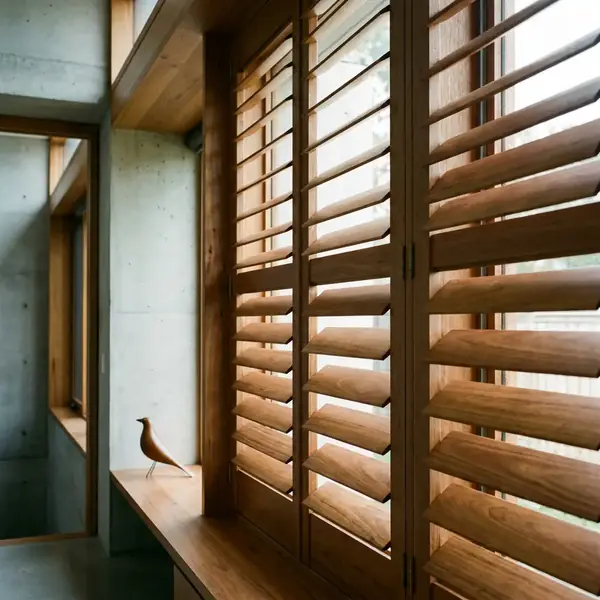
This is the plantation shutter most people picture. Panels sit in a frame fitted to your window reveal, hinged so they swing open like small doors, with louvres that tilt through their full range whether the panels are open or shut. It is the oldest configuration and still the one we fit most.

A fixed panel is the same thing without the hinges. The frame stays put and only the louvres move. That sounds like a compromise and usually is not - for a window you never need to reach through, above a stairwell, over a kitchen bench or in a highlight above a door, a fixed panel gives you the same light and privacy control with nothing to swing into the room.

Most houses end up with a mix. Hinged where you want to open the window behind, fixed where you never will. Deciding that window by window is one of the more useful things that happens during a measure, because it takes cost out of the quote without taking anything out of the result.

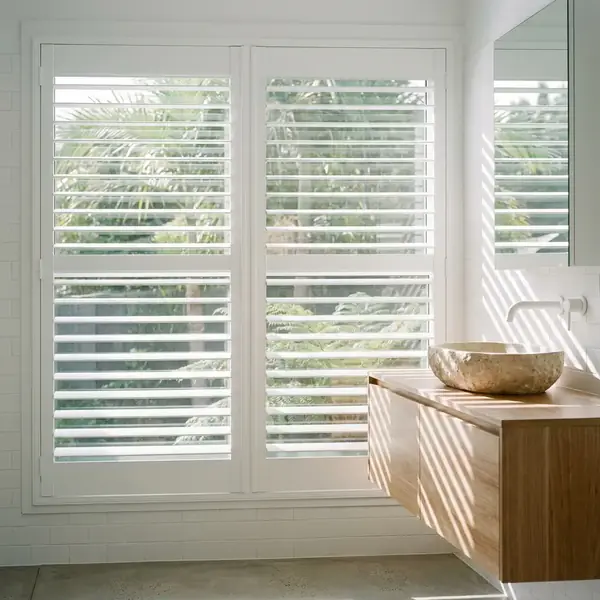
Hinged plantation shutter panels on a bedroom window
Hinged panels, bedroom window

Why hinged and fixed

Why this is the right default for most windows

Around three quarters of the openings we quote end up hinged or fixed. It is not the exciting answer, but on a standard window it is almost always the correct one.

The cleanest look

No track above, nothing on the sill, no stacking depth beside the opening. Just a frame and panels sitting flush in the reveal, which is why it reads as joinery rather than as a window covering.

The most economical option

Fewer moving parts than any other configuration. On a whole-house quote, keeping the standard windows hinged is usually what frees up budget to upgrade the material in the rooms that matter.

Fewest things to go wrong

A hinge is the simplest piece of hardware in the range and a fixed panel has none at all. There is no track to clear, no carrier to adjust and nothing that gets heavier to move over time.

Full louvre control either way

Fixed panels are not static panels. The louvres tilt through their whole range for light, privacy and airflow - you simply cannot swing the frame itself open.

Suits odd shapes

Raked, arched and angled openings are almost always built as fixed panels, because a shaped panel on hinges rarely swings cleanly. It is the configuration that makes awkward windows possible.

Works in every material

Timber for living areas and bedrooms, waterproof PVC for wet rooms, powder-coated aluminium where there is weather. The configuration does not limit the material.

Panel layouts

How the panels are laid out

The layout is worked out at the measure from the width of the opening, where you want the join lines to fall and whether you need to reach the window behind.

Standard windows

Single and double panels

One panel for a narrow window, two meeting in the middle for a standard one. The simplest layout and the one most bedroom and living room windows get.

  • Cleanest sightlines
  • Opens fully to the reveal
  • Most economical layout

Wider windows

Multi-panel with T-post

For a window too wide for two panels, a central T-post divides the opening and carries the extra panels. Keeps each panel a sensible size so nothing sags on its hinges.

  • Four or more panels
  • Keeps panels square long term
  • One extra vertical sightline

Highlights & odd shapes

Fixed and shaped panels

Frames with operable louvres and no hinges, used for highlight windows, raked and arched openings and anywhere the panel never needs to open.

  • Raked, arched and angled
  • Full louvre operation
  • No swing clearance needed

Frame styles

How the frame meets your window

The frame is the part people never think about and the part that decides whether a shutter looks built-in or bolted on. There is usually only one right answer per window.

Inside the reveal

The frame sits within the window recess so the shutter is flush with the wall. The neatest result, and the default wherever the reveal is deep enough.

Face fixed

The frame mounts to the wall around the opening. Used where the reveal is too shallow, or where handles and window winders would foul a recessed panel.

With a sill or bullnose

A finishing sill closes off the bottom of the frame on a window with no existing sill, so the shutter has a proper edge to land against.

Bay and corner returns

Frames mitred to follow a bay window or an internal corner, so the shutters run continuously around the turn instead of stopping at each pane.

Right configuration, right opening

Where hinged and fixed belong - and where they don't

This is the default we start from and move away from only when the opening demands it. If we quote you something more complicated, there will be a reason.

Hinged and fixed are ideal for

  • Bedroom and living room windows
  • Studies, dining rooms and hallways
  • Highlight and feature windows
  • Raked, arched and shaped openings
  • Bay windows and corner returns
  • Any window with room to swing

Stacker doors and wide openings

A doorway you walk through needs panels that fold or track aside. Hinged panels across an opening that size are impractical to live with.

See bi-fold & sliding shutters

Openings with no swing clearance

Over a kitchen bench, behind a dining table or against a narrow verandah, there is nowhere for a panel to open into. Sliding is the answer.

See bi-fold & sliding shutters

Not sure what your window needs?

Send a photo with your enquiry. Most windows are obvious from a picture, and we will tell you what we would spec before anyone comes out.

Ask us what to spec

How it works

Three steps to shutters that fit

A free measure, a fixed price and a proper install - so the shutters go in once, sit square, and keep working for decades.

  1. 01

    Tell us about your windows

    Suburb, shutter type, how many openings and your timeline. 60 seconds online - add a photo and we can quote even sharper.

  2. 02

    Free in-home measure & quote

    A shutter specialist comes to you, measures every opening to the millimetre and leaves you with an exact, all-in price. No pressure, no obligation.

  3. 03

    Custom-made & installed

    Your panels are built to your measurements, then fitted and adjusted on site. Most Sunshine Coast homes are installed 4-6 weeks after measure-up.

Pricing

How much do hinged and fixed shutters cost?

This is the most economical way to shutter a window, and the gap widens as the house gets bigger. Hinged panels use the least hardware of anything we make, and fixed panels use almost none, so more of what you spend goes into the panel itself rather than into the mechanism moving it.

Price still follows panel area rather than window count, and the material matters more than the configuration. As with everything else we quote, the in-home measure is free, takes about half an hour, and you leave with an itemised fixed price per opening that does not change on the invoice.

Book my free measure & quote See what plantation shutters cost

01

Panel area, not window count

Priced by the square metre of panel, so a single large living room window can cost more than two small bedroom ones.

02

Material and finish

PVC generally sits below timber and aluminium above it. On a dry internal window the choice is genuinely yours rather than dictated by exposure.

03

Panel count and T-posts

Wider windows need more panels and sometimes a central post, which adds hardware and install time.

04

Shape and frame type

Raked, arched and bay openings take longer to template and build. A straightforward square reveal is the cheapest thing we fit.

Reviews

What Sunshine Coast homeowners say

Feedback from Sunshine Coast customers who've had plantation shutters measured, made and installed by us.

“Our west-facing lounge was unusable by three in the afternoon. They did timber shutters across the whole front of the house and it’s a completely different room - cooler, and the light is beautiful.”
SSarah M.Buderim
“We’re two streets from the beach so they talked us into aluminium for the alfresco and PVC in the bathrooms instead of timber. Two summers on - no swelling, no rust, no fuss.”
CCraig T.Mooloolaba
“Measured, made and installed exactly when they said. The raked window above the stairs is why we chose them - nobody else wanted to touch it.”
PPriya D.Noosaville

Care

Looking after hinged and fixed shutters

With the least hardware in the range, there is very little to do. What maintenance there is depends on the material rather than the configuration.

  1. 1

    Dust along the louvres

    A microfibre cloth or a vacuum brush head with the louvres tilted flat, every few weeks. On timber, keep it dry rather than damp.

  2. 2

    Open panels from the stile

    Swing the panel from its frame edge rather than by a louvre or the tilt rod. Louvres are not built to carry the weight of the panel.

  3. 3

    Tilt from the middle

    Move louvres from the centre of the slat, not the end. It keeps the tension pins even across the width of the panel.

  4. 4

    Check the hinges yearly

    One turn on a loose hinge screw keeps a panel sitting square in its frame. If a panel starts to catch or drop at the latch edge, call us - adjustments are covered.

FAQ

Hinged and fixed panel questions, answered

What is the difference between hinged and fixed panels?

Hinged panels swing open on a frame so you can reach the window behind them. Fixed panels stay in place and only the louvres tilt. Both give you the same light, privacy and airflow control - the only difference is whether the panel itself opens. Most houses end up with a mix, decided window by window at the measure.

Can I still open my window with shutters fitted?

With hinged panels, yes - swing the panels open and the window behind is completely clear. This is the main reason to choose hinged over fixed, and it matters most on windows with winders, sliding sashes or flyscreens you need to get to.

Do fixed panels still let air through?

Yes. The louvres on a fixed panel operate through their full range exactly like any other shutter, so you get the same airflow and the same privacy control. What you cannot do is swing the frame open to reach the glass, which is why we only specify fixed where you will never need to.

How many panels will my window need?

It depends on the width, and it is one of the things worth discussing at the measure because it decides where the vertical join lines fall. Narrow windows take a single panel, standard windows take two meeting in the middle, and wider openings take four or more with a central T-post to keep each panel a size that will stay square.

Can you shutter a bay window or a corner?

Yes. Frames are mitred to follow the angles so the shutters run continuously around the return rather than stopping and starting at each pane. Bay and corner work takes longer to template, so it sits above a straight window on price, but it is standard work for us.

What about arched and raked windows?

Those are almost always built as fixed panels, because a shaped panel on hinges rarely swings cleanly. The louvres still operate normally. Send a photo with your enquiry and we will tell you straight away whether the shape is doable.

Are hinged shutters cheaper than bi-fold?

Noticeably, yes. The saving is in hardware rather than in the panels themselves - hinges are the simplest and least expensive way to hang a shutter. On a standard window a bi-fold mechanism buys you nothing, which is why we quote hinged unless the opening genuinely needs otherwise.

Which material should I choose?

The room decides it more than you do. Timber for living areas and bedrooms, waterproof PVC for bathrooms and laundries, powder-coated aluminium for anything facing weather or salt air. The configuration works with all three, so choosing hinged does not limit your material.

How long from measure to installation?

Typically four to six weeks, the same as the rest of the range. Panels are made to your exact measurements, so there is a manufacturing window. We confirm the install date at measure-up and the same team that measured does the fit.

What is covered by the warranty?

Product and workmanship are both covered, in writing, on your quote before you commit. Panel adjustments such as hinge tightening and louvre tension tweaks are included.
Service areas

Fitting shutters right across the Sunshine Coast

Local installers covering every suburb from Caloundra to Noosa and out through the hinterland. Tell us what you need and we'll get a shutter specialist out to measure and quote, fast.

Maroochydore & Kawana

MaroochydoreMooloolabaAlexandra HeadlandCotton TreeBuddinaMinyamaWaranaBirtinyaTwin Waters+ all surrounding suburbs

Noosa & Northern Beaches

Noosa HeadsNoosavilleSunshine BeachTewantinPeregian BeachCoolum BeachMarcoolaSunrise Beach+ all surrounding suburbs

Caloundra & Pelican Waters

CaloundraGolden BeachPelican WatersCurrimundiMoffat BeachDicky BeachAroonaLittle Mountain+ all surrounding suburbs

Buderim & the Hinterland

BuderimNambourPalmwoodsMalenyMontvilleWoombyeYandinaEumundiMooloolah Valley+ all surrounding suburbs

If you're anywhere between Caloundra and Noosa we can get an installer to you. See the full service area or get a quote now.

Ready to shutter your place?

Tell us about your windows and we'll book a free in-home measure and a fixed quote.

Get my free quote
Get A Free Shutter Quote