Get A Quote

Bi-fold & Sliding Shutters for Wide Openings

For the openings you actually walk through. Panels that concertina back or glide aside so a stacker door, servery or verandah opening clears completely - then close down for shade, privacy and weather when you want them. Free in-home measure and a fixed price.

  • Openings that clear completely
  • Stacker doors and serveries
  • Timber, aluminium or PVC
  • Made to the millimetre

4.9 · 380+ Sunshine Coast reviews

Free quote 1/5

What kind of shutters?

Pick the closest match - we'll confirm at measure-up.

What kind of shutters?
4.9★380+ Sunshine Coast reviews
2,400+Windows shuttered since 2014
FreeIn-home measure & quote
CustomMade to your exact openings

Bi-fold & sliding explained

What are bi-fold and sliding shutters?

Bi-fold and sliding are not a different material - they are a different way of moving the panels. The louvres, the frame and the finish are the same as any shutter in our range. What changes is the hardware at the top and bottom, and that hardware is what makes a shutter viable across an opening you walk through several times a day.

A bi-fold set has the panels hinged to each other so they concertina and stack against one jamb, clearing the doorway entirely. A sliding set runs the panels on a track so they pass each other and park to one side. Neither needs the swing space that hinged panels do, which is the whole reason they exist.

Get this decision wrong and you end up with a beautiful shutter you stop using, because opening the room means unlatching four panels and finding somewhere for them to sit. We spec the mechanism at the measure, based on how you actually use the opening rather than on what is cheapest to build.

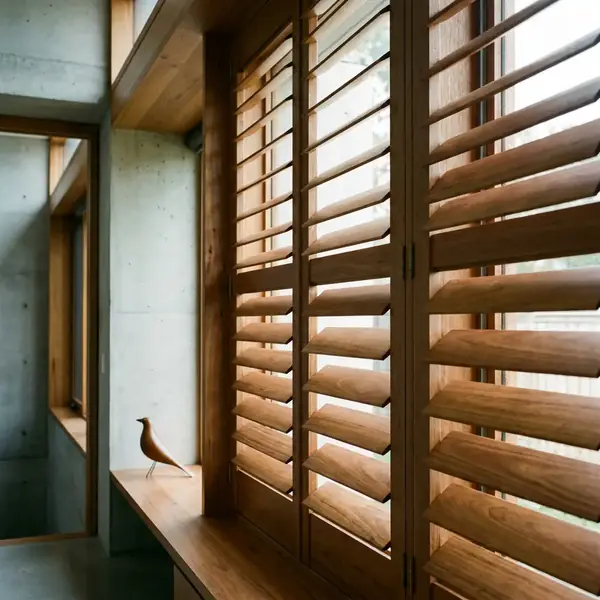
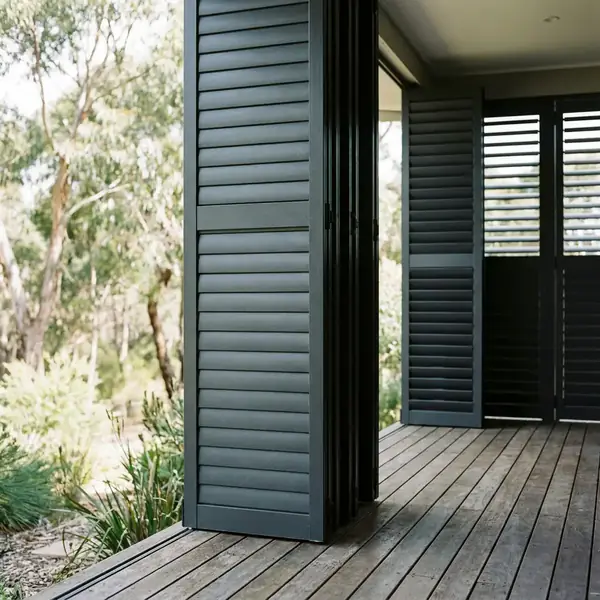
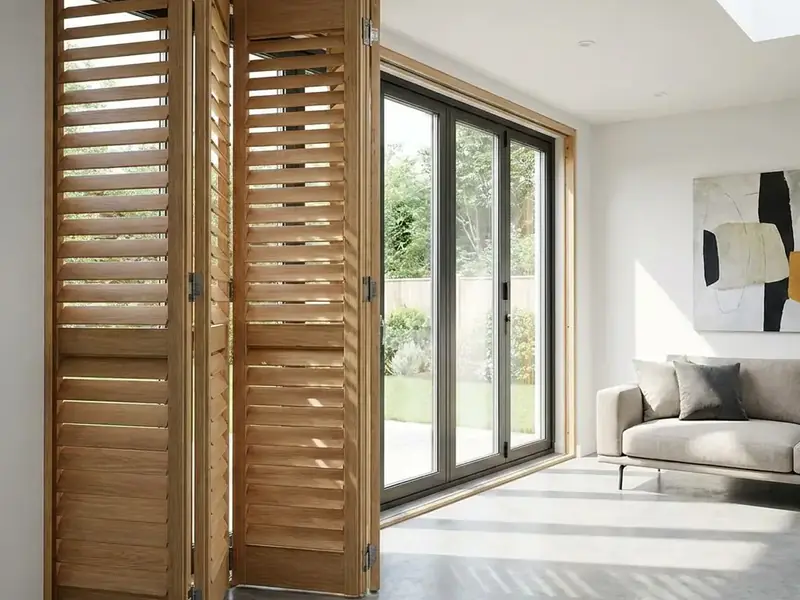
Bi-fold plantation shutter panels stacked back from a wide opening
Bi-fold panels, stacked back

Why bi-fold and sliding

Why wide openings need different hardware

Almost every Sunshine Coast home has one opening that is too wide for hinged panels. This is what changes when you get the mechanism right.

The opening genuinely clears

Folded or tracked aside, the panels sit against the jamb rather than swinging into the room. A stacker door you use every day still works like a stacker door.

No swing space needed

Hinged panels need clear floor and wall to open into. Over a kitchen bench, next to a dining table or on a narrow verandah, that space does not exist.

Full coverage when closed

Closed, they behave like any other shutter - full shade, full privacy, adjustable louvres. You are not trading away performance for the way they move.

One opening, fewer join lines

Because the panels carry on hardware rather than hinges alone, they can be taller and better balanced, so a wide opening reads as one considered element instead of a row of small windows.

Works as a servery

Bi-fold panels over a kitchen servery window fold clear in one movement, which is the difference between using the servery and leaving it shut.

Any material in the range

The mechanism is independent of the material. Timber indoors, aluminium for a weather-facing alfresco, PVC where there is moisture - all three can be built as bi-fold or sliding.

Materials

Which material for a wide opening?

The mechanism is the decision you came here for. The material is the decision that determines whether the set lasts, and it depends entirely on what the opening is exposed to.

Indoors

Timber

Basswood panels for internal wide openings - a lounge that opens to a hallway, a large internal servery, a stairwell landing. The best-looking option where weather is not a factor.

  • Painted or stained
  • Warmest finish in the range
  • Dry internal openings only

Outdoors

Aluminium

Powder-coated aluminium for alfrescos, patios and anything facing weather or salt air. Also the stiffest option, so it handles the widest spans with the fewest panels.

  • Salt-air rated
  • Widest spans possible
  • Handles direct weather

Wet areas

Waterproof PVC

For wide laundry windows, poolside openings and servery windows that cop splash and steam. Wipes clean and will not swell.

  • Fully waterproof
  • Reinforced stiles
  • Easiest to clean

Configurations

How the panels move

Four mechanisms cover almost every wide opening we quote. Which one suits yours depends on the clearance you have, the weight of the panels and which side you want them to end up on.

Bi-fold, stacking one side

Panels hinge to each other and concertina back against a single jamb. The most common choice for serveries and openings where one side has more room.

Bi-fold, splitting centre

Panels fold back to both jambs from the middle. Suits symmetrical openings and keeps the stack depth shallower on each side.

Top-hung sliding

Panels hang from a head track and glide past each other. Nothing on the floor to catch or sweep out, which matters on a threshold you walk over.

Bottom-rolling sliding

Panels run on a bottom track carrying their own weight. The option where the head cannot take the load of tall or heavy panels.

Right mechanism, right opening

Where bi-fold and sliding belong - and where they don't

These mechanisms cost more than hinged panels, and on a normal window they buy you nothing. Here is where the extra hardware earns its place and where it does not.

Bi-fold and sliding are ideal for

  • Stacker and sliding glass doors
  • Kitchen servery windows
  • Alfresco and verandah openings
  • Wide openings with no swing room
  • Openings you pass through daily
  • Room dividers and internal openings

Standard windows

On a bedroom or living room window, hinged or fixed panels do the same job for less money and with less hardware to maintain.

See hinged & fixed panels

Small bathroom windows

A wet-area window rarely needs to clear completely. Fixed PVC panels with operable louvres are simpler and cheaper.

See waterproof PVC shutters

Not sure it is worth it?

Tell us how you use the opening. If hinged panels will do the job we will quote them, because a mechanism you do not need is money that could go into a better material elsewhere.

Ask us what to spec

How it works

Three steps to shutters that fit

A free measure, a fixed price and a proper install - so the shutters go in once, sit square, and keep working for decades.

  1. 01

    Tell us about your windows

    Suburb, shutter type, how many openings and your timeline. 60 seconds online - add a photo and we can quote even sharper.

  2. 02

    Free in-home measure & quote

    A shutter specialist comes to you, measures every opening to the millimetre and leaves you with an exact, all-in price. No pressure, no obligation.

  3. 03

    Custom-made & installed

    Your panels are built to your measurements, then fitted and adjusted on site. Most Sunshine Coast homes are installed 4-6 weeks after measure-up.

Pricing

How much do bi-fold and sliding shutters cost?

These sit at the top of the range, and it is the hardware rather than the panels doing it. Tracks, carriers, multi-point hinges and the extra labour of hanging and balancing a set of linked panels all add up, and they are not places to save money - hardware is what fails first on a mechanism you use daily.

What it costs depends far more on the opening than on the material. The in-home measure takes about half an hour, you get an itemised fixed price per opening before we leave, and the figure on that quote is the figure on the invoice.

Book my free measure & quote See what plantation shutters cost

01

Opening width and height

Priced by the square metre of panel. A full-height stacker door opening is the largest single item on most quotes we write.

02

Number of panels

More panels means more hinges, more carriers and more time on install day getting every one hanging square.

03

Mechanism and track type

Top-hung sliding needs a head that can carry the load, which sometimes means additional structure. Bottom-rolling can be simpler, or vice versa - we work it out at the measure.

04

Material and finish

PVC generally sits below timber, and aluminium above it. On a wide opening the material choice is usually made by the exposure rather than the budget.

Reviews

What Sunshine Coast homeowners say

Feedback from Sunshine Coast customers who've had plantation shutters measured, made and installed by us.

“Our west-facing lounge was unusable by three in the afternoon. They did timber shutters across the whole front of the house and it’s a completely different room - cooler, and the light is beautiful.”
SSarah M.Buderim
“We’re two streets from the beach so they talked us into aluminium for the alfresco and PVC in the bathrooms instead of timber. Two summers on - no swelling, no rust, no fuss.”
CCraig T.Mooloolaba
“Measured, made and installed exactly when they said. The raked window above the stairs is why we chose them - nobody else wanted to touch it.”
PPriya D.Noosaville

Care

Looking after bi-fold and sliding shutters

These are the only shutters in the range with moving hardware you use every day, so they are the only ones that want a genuine yearly check.

  1. 1

    Keep the track clear

    Sand, leaf litter and pet hair collect in a bottom track and are the most common cause of a panel that starts to drag. A vacuum nozzle along the track a few times a year is enough.

  2. 2

    Move panels from the stile

    Push and pull from the frame edge, not from a louvre or the tilt rod. Louvres are not designed to carry the weight of the panel.

  3. 3

    Fold fully, then latch

    Let the set stack completely before latching rather than forcing the last panel. Forcing is what pulls hinges loose over time.

  4. 4

    Yearly hardware check

    One turn on a loose hinge or carrier screw keeps a heavy set hanging square. If a panel drops, catches or stops latching, call us - adjustments are covered.

FAQ

Bi-fold and sliding shutter questions, answered

What is the difference between bi-fold and sliding shutters?

Bi-fold panels are hinged to each other and concertina back to stack against a jamb. Sliding panels run on a track and pass each other to park to one side. Bi-fold clears more of the opening, sliding needs less depth for the stack and is easier to move with one hand. Which suits you depends on how much room there is beside the opening and how often you move them.

How wide an opening can you cover?

Very wide, but the answer depends on the material and the mechanism rather than a single number. Aluminium spans furthest with the fewest panels, timber and PVC need more stiles across the same width. We work the panel layout out at the measure so you know exactly how many join lines you will be looking at before you commit.

Do the panels stack inside or outside the opening?

Either, and it is worth thinking about before the measure. Stacking inside keeps the panels out of the weather but uses wall space in the room. Stacking outside keeps the room clear but exposes the stack, which usually means specifying aluminium. We will walk the opening with you and show you both.

Can the louvres still be adjusted when the panels are closed?

Yes. Closed, a bi-fold or sliding set behaves exactly like any other plantation shutter - the louvres tilt through their full range for light, privacy and airflow. The mechanism only changes how the panels themselves move.

Will a bi-fold set be heavy to open?

Not when it is hung correctly. Weight is carried by the track or the hinges rather than by you, and a properly balanced set moves with one hand. If a set becomes heavy over time it is almost always track debris or a hinge that has worked loose, both of which are adjustments rather than faults.

Can I use bi-fold shutters on an outdoor alfresco?

Yes, and it is one of the most common things we fit. Specify powder-coated aluminium for that position rather than timber - direct weather and salt air will move timber regardless of how well it is finished, and aluminium also handles the wider spans an alfresco usually needs.

Do they need a track in the floor?

Not always. Top-hung sliding sets carry their weight from a head track with nothing on the floor, which is the better answer across a threshold you walk over. Bottom-rolling sets need a floor track but do not load the head. Which one we use depends on what your opening can structurally carry.

How long from measure to installation?

Typically four to six weeks, the same as the rest of the range. Wide openings sometimes take a little longer because the panel layout and hardware are worked out to your exact measurements. We confirm the install date at measure-up.

What is covered by the warranty?

Product and workmanship are both covered, in writing, on your quote before you commit. That includes the track and hinge hardware, and the adjustments a moving set needs over its life.

Service areas

Fitting shutters right across the Sunshine Coast

Local installers covering every suburb from Caloundra to Noosa and out through the hinterland. Tell us what you need and we'll get a shutter specialist out to measure and quote, fast.

Maroochydore & Kawana

MaroochydoreMooloolabaAlexandra HeadlandCotton TreeBuddinaMinyamaWaranaBirtinyaTwin Waters+ all surrounding suburbs

Noosa & Northern Beaches

Noosa HeadsNoosavilleSunshine BeachTewantinPeregian BeachCoolum BeachMarcoolaSunrise Beach+ all surrounding suburbs

Caloundra & Pelican Waters

CaloundraGolden BeachPelican WatersCurrimundiMoffat BeachDicky BeachAroonaLittle Mountain+ all surrounding suburbs

Buderim & the Hinterland

BuderimNambourPalmwoodsMalenyMontvilleWoombyeYandinaEumundiMooloolah Valley+ all surrounding suburbs

If you're anywhere between Caloundra and Noosa we can get an installer to you. See the full service area or get a quote now.

Ready to shutter your place?

Tell us about your windows and we'll book a free in-home measure and a fixed quote.

Get my free quote
Get A Free Shutter Quote