Get A Quote

Plantation Shutters for Sliding Doors on the Sunshine Coast

A sliding door is the hardest opening in the house to get right, and the one most often got wrong. Panels have to clear the doorway completely, move with one hand, and not leave a track you trip over. Free in-home measure and a fixed price.

  • The doorway clears completely
  • Track or bi-fold, spec'd to the opening
  • Works with the door still in use
  • Made to the millimetre

4.9 · 380+ Sunshine Coast reviews

Free quote 1/5

What kind of shutters?

Pick the closest match - we'll confirm at measure-up.

What kind of shutters?
4.9★380+ Sunshine Coast reviews
2,400+Windows shuttered since 2014
FreeIn-home measure & quote
CustomMade to your exact openings

Sliding doors explained

Can you put plantation shutters on a sliding door?

Yes, and it is some of the most common work we do on the Sunshine Coast. Almost every home built here in the last thirty years has at least one stacker or sliding door onto an alfresco, and those openings are exactly where curtains look wrong and vertical blinds rattle.

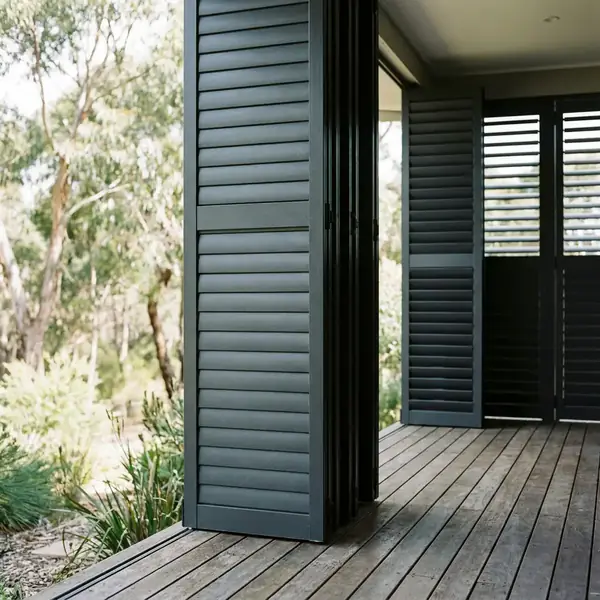
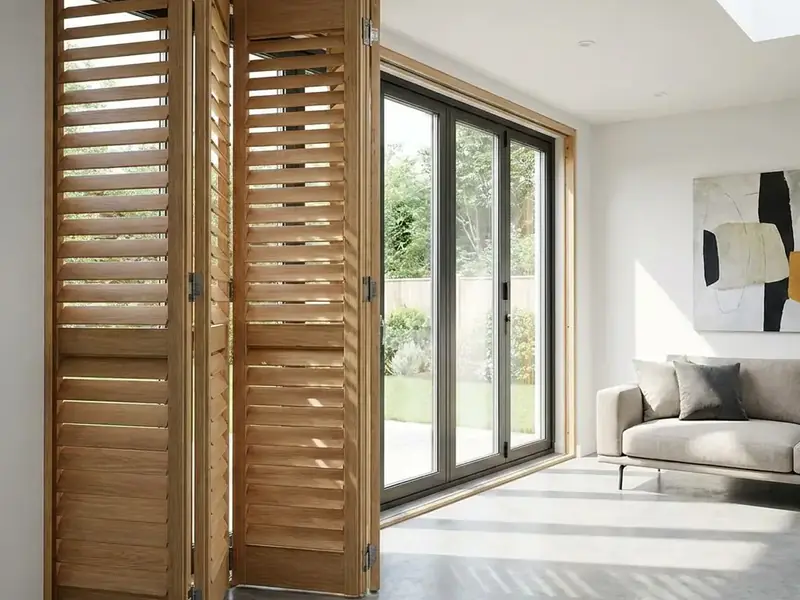
The difference between a sliding door shutter and a window shutter is entirely in how the panels move. Hinged panels are useless across a doorway - four of them swinging into the room is unusable, and you will stop bothering within a fortnight. Door openings get either bi-fold panels that concertina back against one jamb, or panels on a track that pass each other and park to one side.

Which of those two you want depends on how much room there is beside the opening, whether the head or the floor can carry the load, and how often you actually walk through. That is the conversation we have at the measure, standing in front of the opening, rather than something you should have to guess at from a website.

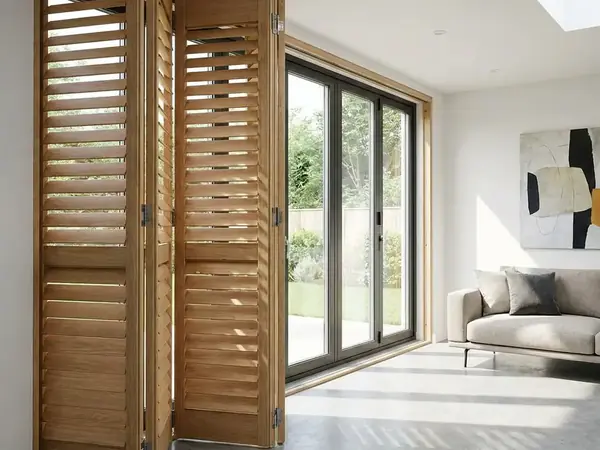
Bi-fold plantation shutter panels stacked clear of a sliding door
Bi-fold panels, stacked clear

Why shutters on a door

Why shutters beat blinds and curtains on a sliding door

This is the opening where the difference between window coverings is most obvious, because it is the one you use every day.

The doorway actually clears

Folded or tracked aside, the panels sit flat against the jamb. You keep the full width of the opening, which is the entire reason you paid for a stacker door in the first place.

Nothing to catch in the wind

A Sunshine Coast afternoon breeze through an open stacker turns vertical blinds into a percussion instrument and pulls curtains outside. Rigid panels do neither.

Light control at door scale

A door is the biggest glazed area in most homes and usually the worst heat source. Closed louvres stop that sun before it reaches the glass rather than absorbing it inside the room.

Privacy without darkness

Angle the louvres down and you can see out to the alfresco while nobody sees in, with the door still open behind them. No fabric does that.

No cords at floor level

Vertical blind chains sit exactly at toddler and dog height across a doorway. Shutters have no cords, chains or loose fabric anywhere in the system.

It looks like part of the house

A full-height shutter across a door reads as joinery. It is the difference between a covered opening and an architectural one, and it is what shows up in listing photos.

The mechanism

Track, bi-fold or bi-pass?

Three ways to move a panel across a doorway. The right one depends on clearance beside the opening, what the structure can carry, and whether you want the floor completely clear.

Clears the most

Bi-fold panels

Panels hinged to each other concertina back and stack flat against one jamb, or split and stack to both. Clears more of the opening than anything else, and the whole set moves in one gesture.

  • Maximum clear opening
  • Needs stacking depth at the jamb
  • Best for serveries and alfrescos

Easiest to move

Sliding on track

Panels hang from a head track or run on a bottom track and pass each other to park at one side. One-handed operation even on tall, heavy panels, and no folding sequence to remember.

  • Moves with one hand
  • Panels overlap when open
  • Suits very wide openings

Shallow stacking

Bi-pass panels

Two or more panels on parallel tracks sliding behind one another, like a wardrobe door. Useful where there is no room to stack a bi-fold and no appetite for a deep track.

  • Minimal stacking depth
  • Always covers part of the opening
  • Simple, few moving parts

The detail that matters

Four things to settle before the panels are built

These are the decisions that separate a door shutter you use daily from one you leave closed. All four get answered at the measure.

Which side they stack

Panels have to go somewhere. Stacking depth is real and it eats wall space, so we work out which jamb has the room before anything is ordered.

Head track or floor track

Top-hung leaves the threshold completely clear, which matters on a doorway you walk over. It needs a head that can carry the panel weight, so sometimes the floor track is the honest answer.

Whether the door still opens

Most people want the glass door usable with the shutters closed on hot nights. That changes the panel layout, so tell us at the measure if it matters to you.

Flyscreens and door handles

Sliding door handles and existing flyscreen tracks both foul a shutter frame if nobody checks. We measure around them rather than discovering them on install day.

Right product, right opening

Which material for a sliding door

Door openings are large, heavy and often exposed, so the material matters more here than on a bedroom window. Exposure decides it, not budget.

Shutters suit these door openings

  • Stacker and sliding glass doors
  • Alfresco and patio doors
  • French and hinged door pairs
  • Kitchen servery openings
  • Balcony and verandah doors
  • Wide internal room dividers

Doors onto a covered alfresco

Under a roof but still getting weather and salt air, powder-coated aluminium is the only material we will specify. It also spans widest with the fewest panels.

See aluminium shutters

Internal doors and dry openings

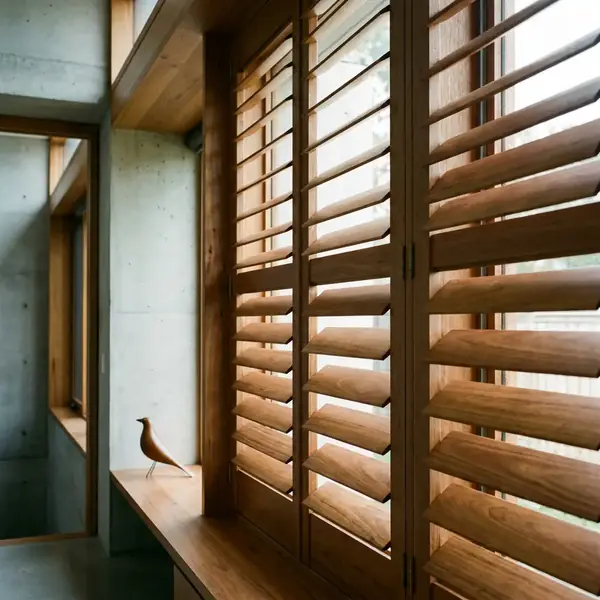
A door between two rooms, or onto a fully enclosed sunroom, can take timber - and timber is the better-looking option wherever weather is not a factor.

See timber shutters

Not sure which mechanism?

Send a photo of the opening with your enquiry. Door openings are usually obvious from a picture and we will tell you what we would spec before anyone visits.

Ask us what to spec

How it works

Three steps to shutters that fit

A free measure, a fixed price and a proper install - so the shutters go in once, sit square, and keep working for decades.

  1. 01

    Tell us about your windows

    Suburb, shutter type, how many openings and your timeline. 60 seconds online - add a photo and we can quote even sharper.

  2. 02

    Free in-home measure & quote

    A shutter specialist comes to you, measures every opening to the millimetre and leaves you with an exact, all-in price. No pressure, no obligation.

  3. 03

    Custom-made & installed

    Your panels are built to your measurements, then fitted and adjusted on site. Most Sunshine Coast homes are installed 4-6 weeks after measure-up.

Pricing

What do shutters for a sliding door cost?

A sliding door is normally the single largest line on a quote, because shutters are priced by panel area and a stacker door is several square metres of it. Expect a full-height door opening to sit somewhere between $1,500 and $4,000 installed depending on width, material and mechanism.

The mechanism adds to it. A tracked sliding set runs roughly 20 to 35 per cent above the same panels hinged, and bi-fold 15 to 30 per cent, because there is more hardware and considerably more time on install day getting a heavy set hanging dead level. That premium is not a place to save money on an opening you use daily.

Book my free measure & quote See what plantation shutters cost

01

The width of the opening

Priced by the square metre of panel. A 3 metre stacker is roughly six square metres before anything else is decided.

02

Track versus bi-fold

Both cost more than hinged panels. Which is dearer on your opening depends on panel count and whether the head needs reinforcing.

03

Material and exposure

Aluminium for anything facing weather, which sits at the top of the range. Timber for internal openings, PVC where there is splash.

04

Structure and access

A head track on a doorway that cannot carry the load needs something to fix into. That gets checked at the measure, not discovered on the day.

Reviews

What Sunshine Coast homeowners say

Feedback from Sunshine Coast customers who've had plantation shutters measured, made and installed by us.

“Our west-facing lounge was unusable by three in the afternoon. They did timber shutters across the whole front of the house and it’s a completely different room - cooler, and the light is beautiful.”
SSarah M.Buderim
“We’re two streets from the beach so they talked us into aluminium for the alfresco and PVC in the bathrooms instead of timber. Two summers on - no swelling, no rust, no fuss.”
CCraig T.Mooloolaba
“Measured, made and installed exactly when they said. The raked window above the stairs is why we chose them - nobody else wanted to touch it.”
PPriya D.Noosaville

Care

Looking after a sliding door set

These are the only shutters in the house with hardware you operate daily, so they are the only ones that genuinely want a yearly look.

  1. 1

    Keep the track clear

    Sand off the alfresco, leaf litter and pet hair collect in a bottom track and are the most common cause of a set that starts to drag. A vacuum nozzle a few times a year is enough.

  2. 2

    Push from the stile

    Move panels from the frame edge, never from a louvre or the tilt rod. Louvres are not built to carry the weight of a full-height door panel.

  3. 3

    Fold fully before latching

    Let a bi-fold set stack completely rather than forcing the last panel home. Forcing is what pulls hinges loose over a few years.

  4. 4

    Rinse the salt off

    On an aluminium set within a few streets of the surf, fresh water over the panels every few months is the single thing that keeps the powder coat looking new.

FAQ

Sliding door shutter questions, answered

Can you put plantation shutters on a sliding door?

Yes, and it is one of the most common jobs we do on the Sunshine Coast. The panels are built as a bi-fold set that concertinas back against the jamb, or on a track so they pass each other and park to one side. Hinged panels are not used on a doorway because four of them swinging into the room is impractical to live with.

Can I still use the door with the shutters closed?

Usually yes, and it is worth saying so at the measure because it changes the panel layout. Most people want the glass door usable on a hot night with the shutters closed for privacy, so we plan an operable panel or leaf into the set rather than treating the shutter as a fixed screen.

Do I need a track in the floor?

Not always. Top-hung sliding sets carry their weight from a head track with nothing on the floor at all, which is the better answer across a threshold you walk over daily. It needs a head that can take the load. Where it cannot, a bottom track is the honest solution and we will say so.

Bi-fold or sliding for a stacker door?

Bi-fold clears more of the opening, sliding is easier to move with one hand and needs less stacking depth beside the jamb. If you entertain and want the whole opening clear, bi-fold. If you move the panels constantly and space beside the door is tight, sliding. We work it out standing at the opening.

How much do shutters for a sliding door cost?

Typically $1,500 to $4,000 installed for a full-height door opening, depending on width, material and mechanism. Shutters are priced by panel area and a stacker door is several square metres, so it is usually the largest single line on a quote. The tracked mechanism adds roughly 20 to 35 per cent over the same panels hinged.

Will they work with my flyscreen?

Generally yes, but it has to be checked rather than assumed. Existing flyscreen tracks and sliding door handles both foul a shutter frame if nobody measures around them. We look at both at the measure so there are no surprises on install day.

What material should I use on an alfresco door?

Powder-coated aluminium. A door onto an alfresco gets direct weather and, on the Coast, salt air as well, and both will move timber eventually no matter how well it is finished. Aluminium also spans widest with the fewest panels, which matters on a wide opening.

Will a shutter across a door rattle in the wind?

Not when it is hung correctly. Rattle comes from panels that are not sitting square or hardware that has worked loose, both of which are adjustment issues rather than product faults, and both are covered by the workmanship warranty. It is one of the main reasons people replace vertical blinds with shutters on a door.

How long from measure to installation?

Typically four to six weeks, the same as the rest of the range. Door openings occasionally take a little longer because the panel layout and hardware are worked out to your exact measurements. We confirm the install date at measure-up.
Service areas

Fitting shutters right across the Sunshine Coast

Local installers covering every suburb from Caloundra to Noosa and out through the hinterland. Tell us what you need and we'll get a shutter specialist out to measure and quote, fast.

Maroochydore & Kawana

MaroochydoreMooloolabaAlexandra HeadlandCotton TreeBuddinaMinyamaWaranaBirtinyaTwin Waters+ all surrounding suburbs

Noosa & Northern Beaches

Noosa HeadsNoosavilleSunshine BeachTewantinPeregian BeachCoolum BeachMarcoolaSunrise Beach+ all surrounding suburbs

Caloundra & Pelican Waters

CaloundraGolden BeachPelican WatersCurrimundiMoffat BeachDicky BeachAroonaLittle Mountain+ all surrounding suburbs

Buderim & the Hinterland

BuderimNambourPalmwoodsMalenyMontvilleWoombyeYandinaEumundiMooloolah Valley+ all surrounding suburbs

If you're anywhere between Caloundra and Noosa we can get an installer to you. See the full service area or get a quote now.

Ready to shutter your place?

Tell us about your windows and we'll book a free in-home measure and a fixed quote.

Get my free quote
Get A Free Shutter Quote